Greco-Roman wrestling
Table of Contents
History of Greco-Roman wrestling
Regarded as the oldest style of wrestling, Greco-Roman wrestling is often referred to as classical wrestling. In Ancient Greece, it was a prominent part of the Olympic Games, first appearing in 708 BC. The Romans adopted the sport and incorporated it into their military training routines. In the 19th century, Greco-Roman wrestling was modernized in France. During this era, it became a spectacle in French circus arenas before spreading across Europe.
Greco-Roman wrestling was one of the nine sports included in the first Olympic Games held under the banner of the International Olympic Committee in 1896. The first World Championship for this style took place in 1904, while the inaugural European Championship was held in 1911.
Rules
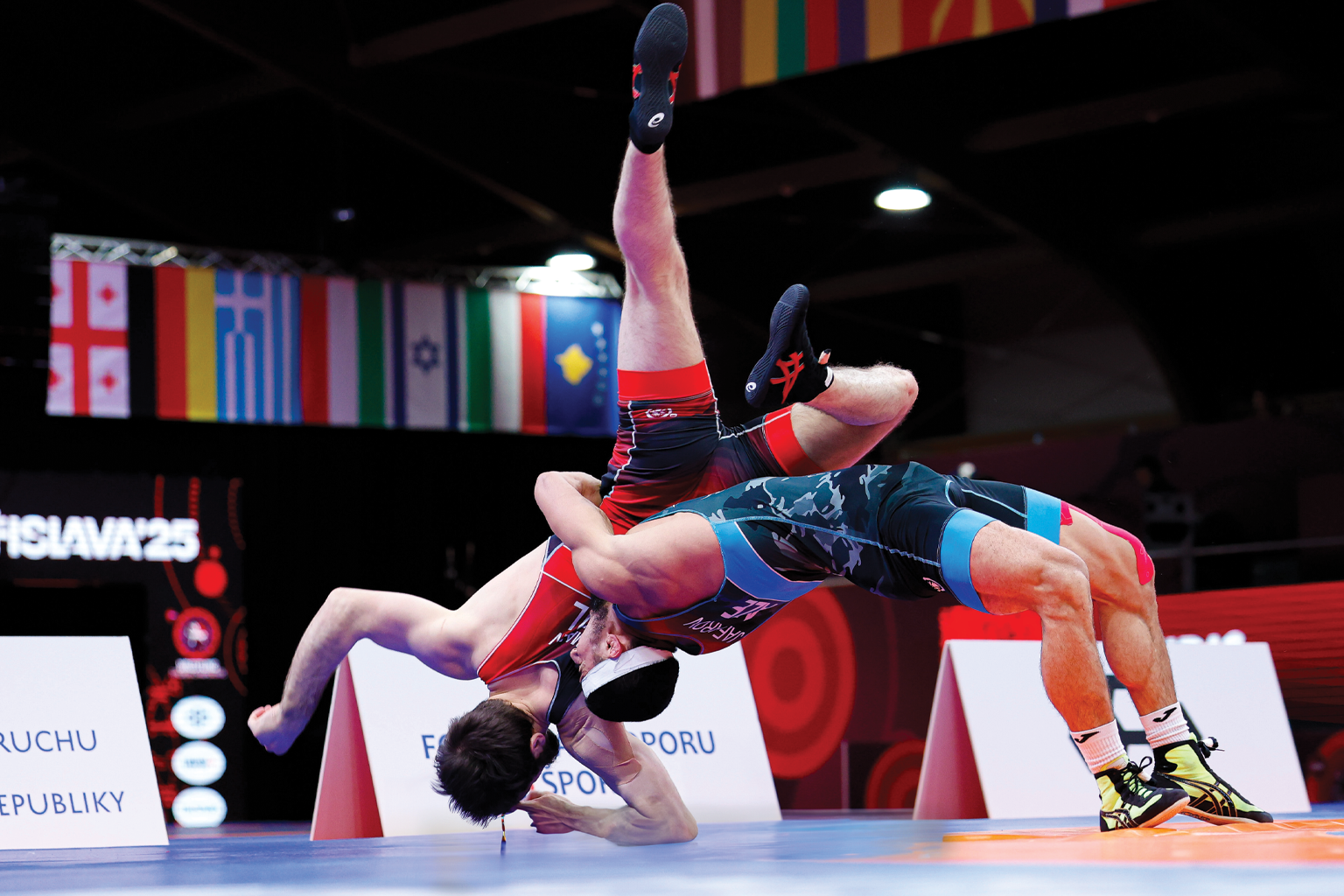
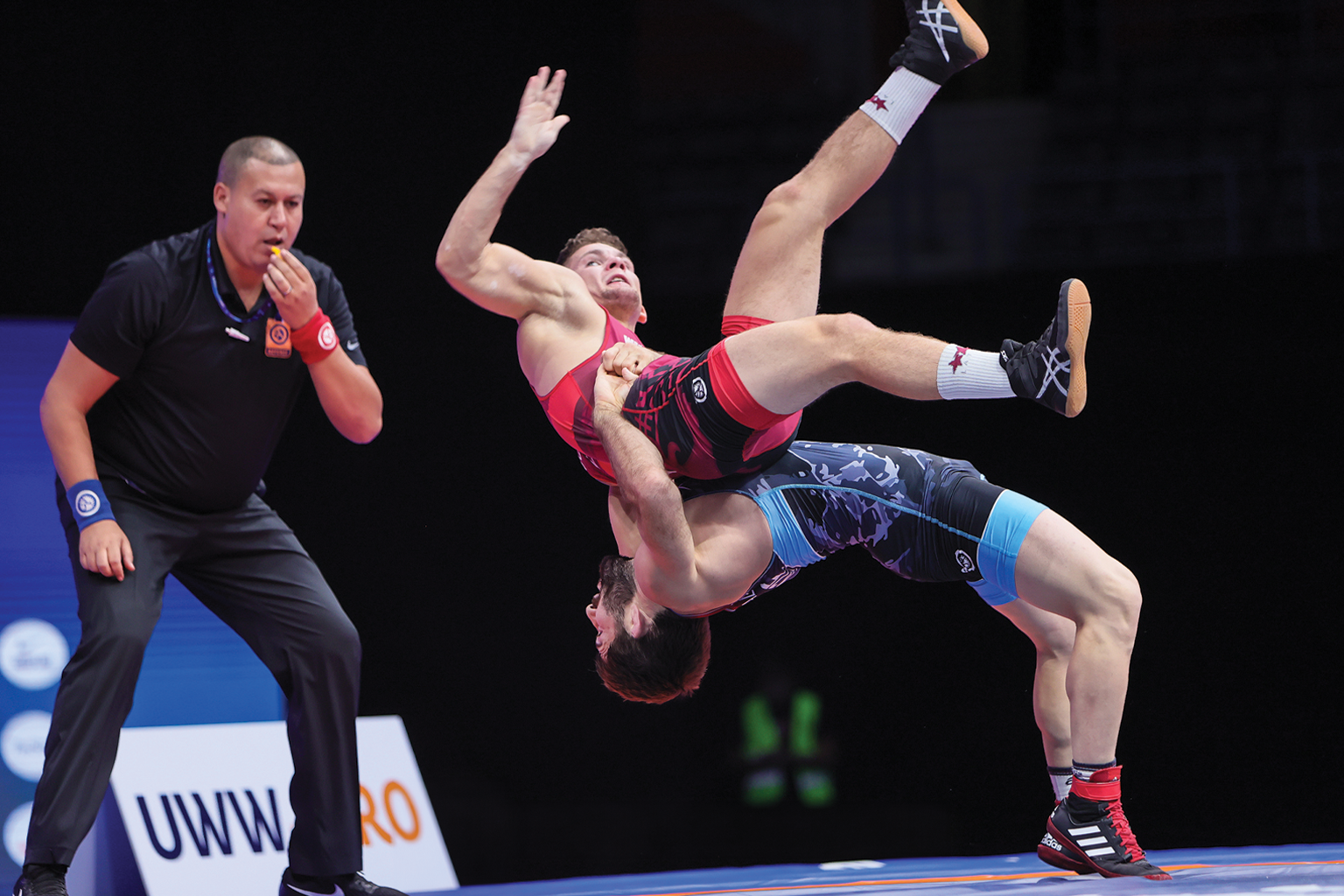
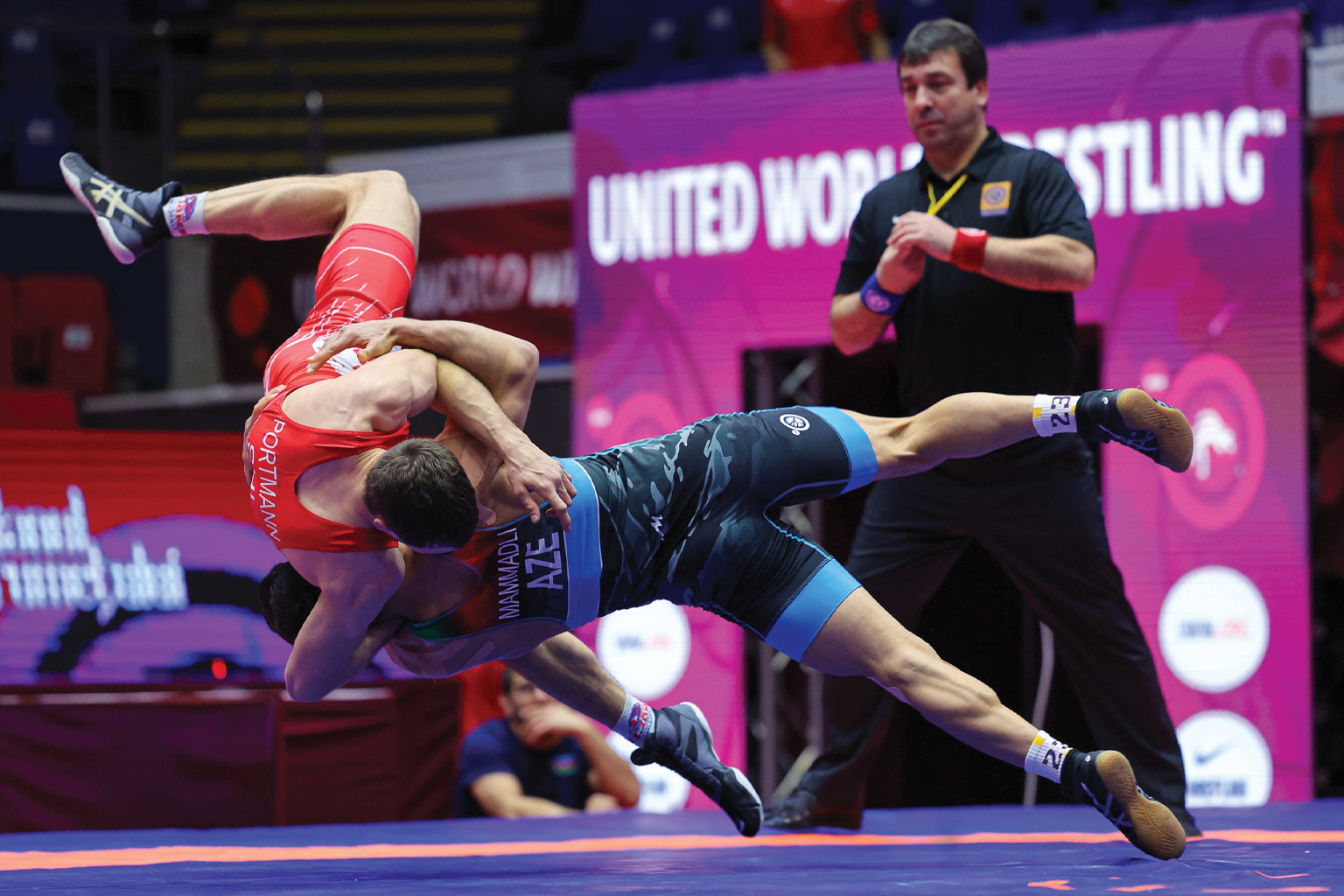
This style of wrestling is characterized by its emphasis on upper body techniques. Common moves include gut wrenches, arm throws, chest throws, headlocks, and counter throws. In classical wrestling, holds are permitted only above the waist. Wrestlers may only make contact with the upper body, and it is strictly forbidden to touch or attack the opponent’s legs, either in offense or defense. As a result, physical strength plays a crucial role in success.
Each bout consists of two three-minute periods, making up a total of six minutes. For younger age groups (U17, U15), matches last four minutes in total, with two-minute halves. Victory can be secured before time runs out by pinning the opponent’s shoulders to the mat (a fall) or gaining an 8-point superiority. Techniques are awarded 1, 2, 4, or 5 points, depending on their effectiveness and execution.
Greco-Roman wrestling competitions are held in 10 weight categories. Of these, six (60 kg, 67 kg, 77 kg, 87 kg, 97 kg, 130 kg) are Olympic categories, while four (55 kg, 63 kg, 72 kg, 82 kg) are non-Olympic classes.
The road to growth
In Azerbaijan, the spread of this wrestling style began primarily during the Soviet era. In the 1920s and 1930s, various wrestling styles, including Greco-Roman, began to be promoted. Local tournaments, regional USSR competitions, and the establishment of specialized wrestling schools played a vital role in the popularization of the sport. From the 1960s onward, Azerbaijani wrestlers began to earn spots on the Soviet national team. In 1978, Arif Niftullayev made history as the first Azerbaijani world champion in Greco-Roman wrestling. Alongside him, accomplished athletes such as Kamandar Majidov, Viktor Avdishev, and Mahaddin Allahverdiyev emerged from Azerbaijan’s Greco-Roman wrestling school.
The wrestlers who left a mark
Following Azerbaijan’s independence, this wrestling style gained even more popularity and entered a new era of development. Olympic and two-time world champion Farid Mansurov, as well as Rovshan Bayramov, Rafiq Huseynov, Eldeniz Azizli, Natiq Eyvazov, Rasul Chunayev, Hasan Aliyev, Hasrat Jafarov, Emin Ahmadov, Sabah Shariati, Nihat Mammadli, Ulvu Ghanizade, Senan Suleymanov, and Murad Mammadov are considered the brightest stars of our Greco-Roman wrestling.